AI Chat With Memory: How an Advanced Memory Dashboard Keeps Roleplay Consistent
0
1
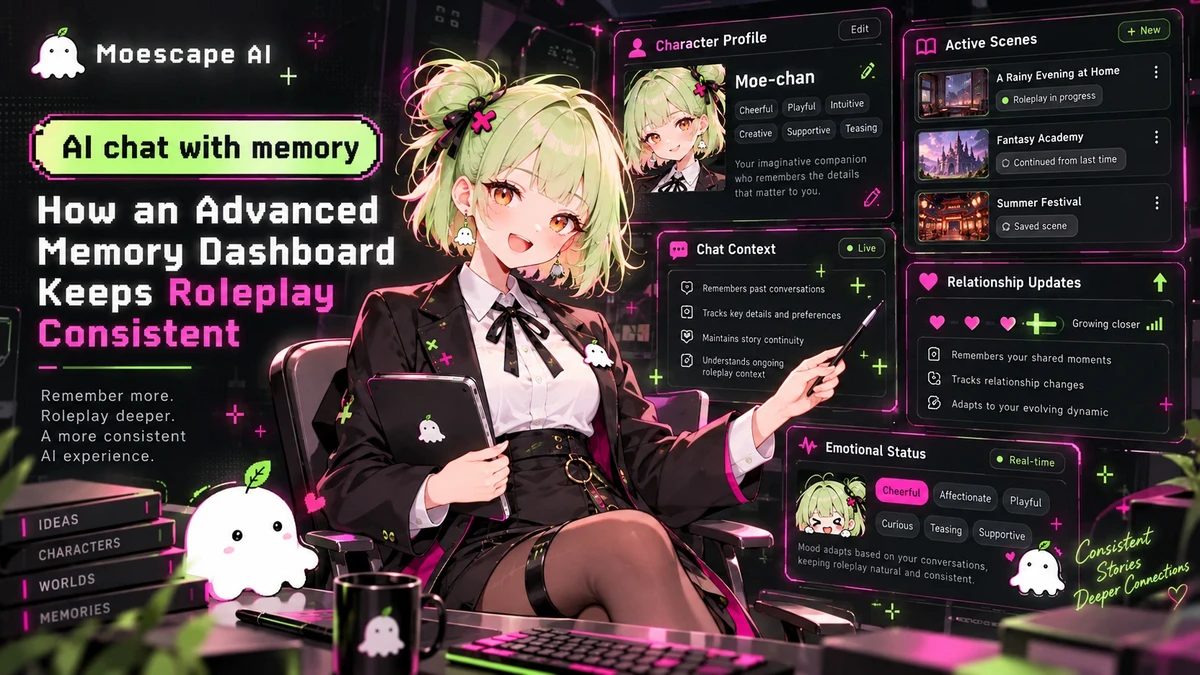
AI chat with memory is most valuable when users can understand what the system is actually carrying forward. In long roleplay sessions, dozens of details may matter at once: character appearance, current location, recent events, emotional changes, relationship progress, and unresolved story threads. An advanced memory dashboard can make that information easier to organize and review. For roleplayers, this can turn memory from an invisible background feature into a practical storytelling tool. The Problem With Long Conversations A short character chat usually has a simple context. A long-running roleplay does not. Over time, the conversation may include new outfits, changing motivations, side characters, promises, conflicts, relationship milestones, and multiple active scenes. When important details are lost, users may notice sudden inconsistencies. A character might forget what happened, react as if an old conflict never occurred, or revert to an earlier relationship dynamic. These breaks can reduce immersion even when individual responses are well written. What an Advanced AI Memory System Should Track A practical roleplay memory system should separate different types of information instead of presenting everything as one large summary. Stable character traits should not be treated the same way as a temporary scene. Relationship changes deserve different handling from basic profile information. Moescape AI's Advanced Memory dashboard organizes roleplay information into several useful areas. Character Profile can capture appearance, outfit, personality, and related details. Active Scenes can reflect important ongoing events. Chat Context can preserve key developments from the conversation. Relationship Updates can show how the connection between characters changes over time, while Emotional Status can reflect current mood and feelings. Why a Visible Dashboard Is Useful The biggest advantage of a memory dashboard is transparency. Users can open the interface and see the categories that are shaping their ongoing roleplay. This makes it easier to understand why a character may respond in a certain way and to spot whether important story information is being represented. It also helps creators manage complex roleplay. Instead of manually rereading a long transcript to remember what changed, they can review a structured snapshot of the current story state. Memory as Part of a Larger Creative Workflow Long-term character memory becomes even more useful when the roleplay connects to other creative tools. A remembered outfit can inspire an image. An active scene can become a visual composition. A relationship milestone can become the basis for a cinematic video moment. Moescape AI combines character chat with image and video generation, so the information developed through roleplay can support visual storytelling as well. Keeping Roleplay Consistent Over Time No memory system can replace strong character setup or thoughtful storytelling, but advanced AI memory can reduce avoidable continuity breaks. The most useful systems preserve key information while giving users enough visibility to understand how the story is evolving. For users exploring AI chat with memory, Moescape AI's Advanced Memory dashboard provides a structured way to follow character details, scenes, context, relationships, and emotional changes. That makes it especially relevant for long-form roleplay where consistency matters as much as the quality of a single response. A Useful Roleplay Habit For complex stories, it helps to check the memory dashboard after major scene changes. A new location, relationship milestone, outfit change, or emotional turning point may affect future interactions. Reviewing the current memory state can make it easier to keep the next scene aligned with the story you are building.