AI Roleplay With Memory: How Long-Term Memory Creates Better Stories
0
1
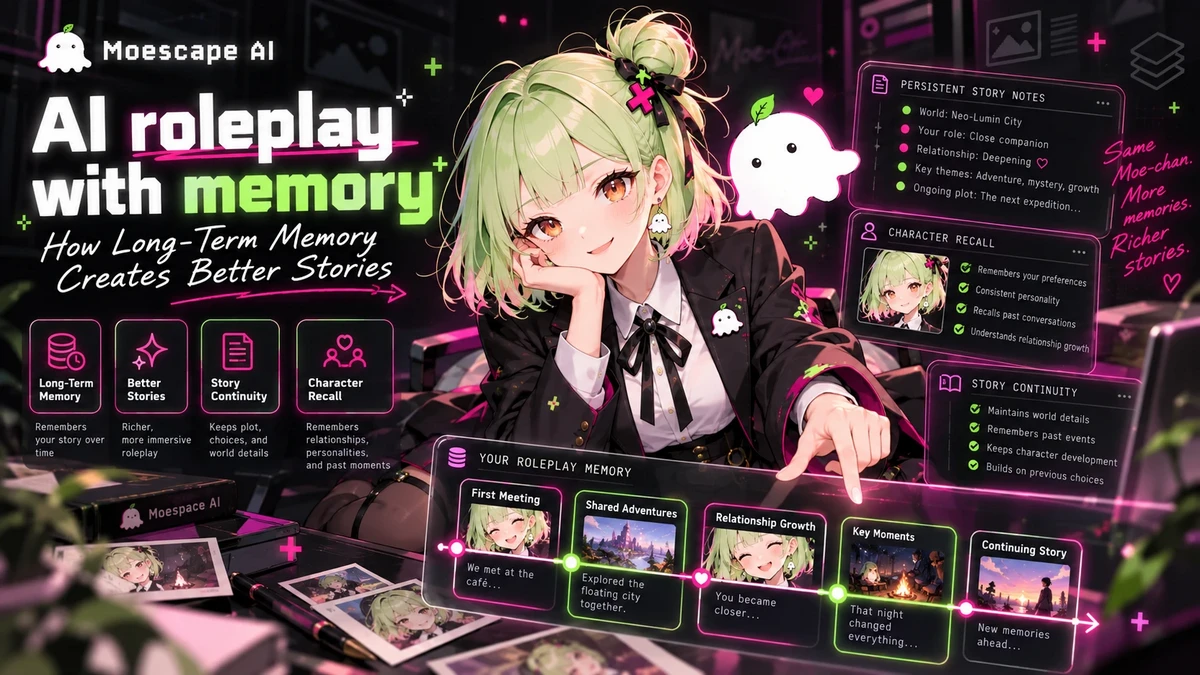
A memorable roleplay depends on more than good writing in the current message. Long-form stories build meaning through continuity. Characters remember what happened, relationships change, locations gain history, and small details from earlier scenes can become important later. This is why AI roleplay with memory has become one of the most important features for users who want persistent stories. Without useful memory, even a well-written chatbot can begin to feel disconnected from its own narrative. Why Memory Matters in Long-Form Roleplay Roleplay naturally accumulates information. A character may change clothes, reveal a fear, develop a nickname for the user, move to a new location, begin a relationship, or make a decision that affects future scenes. If those details disappear from the conversation, the story can lose emotional weight. Long-term memory AI can help preserve the information that makes a story feel continuous. Instead of treating every new scene as nearly independent, a memory system can retain important context so later interactions have a stronger connection to earlier events. Different Types of Roleplay Memory Not all memory is the same. Character information includes stable details such as appearance, personality, background, and preferences. Scene memory tracks what is currently happening. Relationship memory records how characters feel about each other and how that connection has changed. Emotional context can reflect the character's current mood or reaction to recent events. A useful AI chatbot with memory needs to balance these categories. Remembering everything equally can create noise, while remembering too little can break continuity. The goal is to preserve details that are likely to matter to the story. How Moescape AI Uses Advanced Memory Moescape AI's Advanced Memory experience is designed to make ongoing roleplay easier to follow. When the feature is enabled, users can view organized information through an Advanced Memory dashboard. The dashboard can surface Character Profile details, Active Scenes, Chat Context, Relationship Updates, and Emotional Status. These categories give users a clearer picture of what the system is tracking as the conversation develops. For long-running RP, that visibility can be especially useful because users are not left guessing which parts of the story are still relevant. Memory Supports Better Character Development Persistent memory can make character development feel more earned. A relationship can progress gradually rather than resetting emotionally. A character can react differently after an important event. Recurring locations and objects can gain meaning. Previous conflicts can influence future decisions. This does not mean memory should replace good prompting or character design. Instead, it acts as a foundation that helps the AI preserve the consequences of earlier scenes. Building Stories That Continue For writers and roleplayers, the appeal of persistent memory AI chat is simple: the story can feel like it has a past. That past gives new scenes more context and makes long-term character arcs easier to maintain. Moescape AI combines memory-focused roleplay with character creation and visual tools, allowing users to continue the same fictional world through chat, images, and video. For anyone interested in AI roleplay with memory, that connected workflow can turn a sequence of messages into a more coherent, evolving story. What Users Can Do to Improve Continuity Memory works best when the roleplay itself is clear. Establish important character traits early, keep major changes explicit, and give significant events enough context to matter. When a platform provides a visible memory interface, reviewing it periodically can also help users understand how the story state is evolving.