How AI Character Relationships Evolve During Long-Form Roleplay
0
2
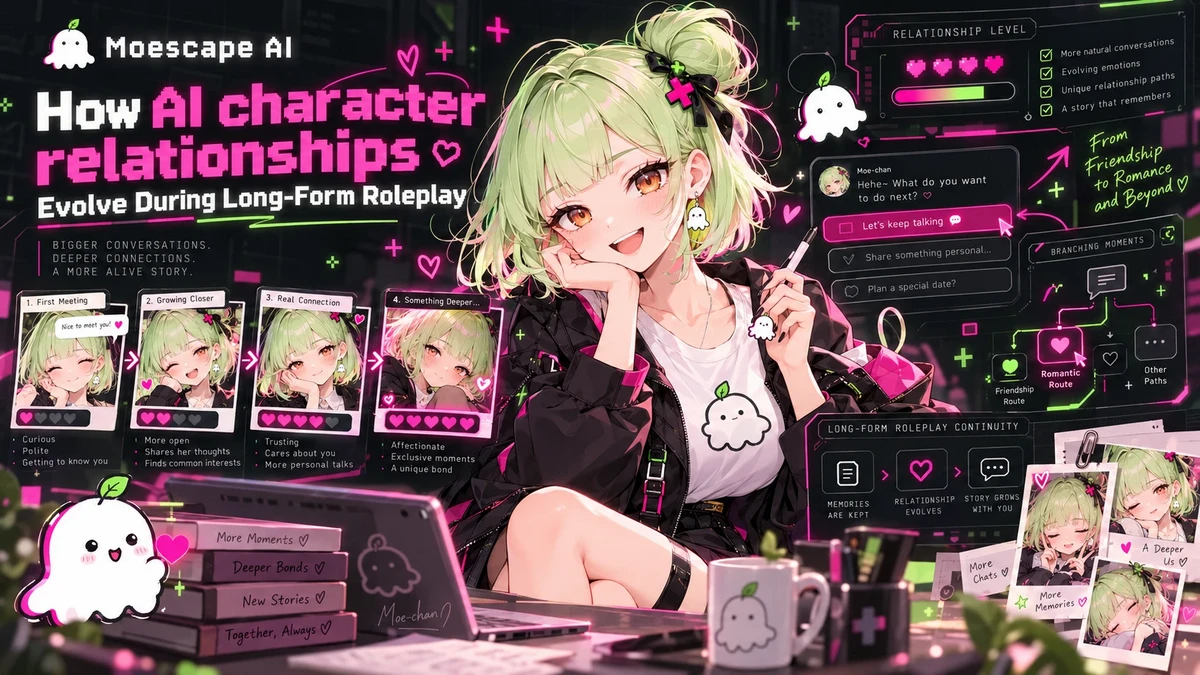
The most engaging character roleplay often changes over time. Two characters may begin as strangers, become allies, develop trust, fall into rivalry, or build a deeper emotional connection through many separate scenes. AI character relationships become more convincing when those changes are treated as an ongoing progression rather than a fixed label. For long-form roleplay, relationship development can be just as important as plot. Why Relationship Progression Matters Realistic fictional relationships are shaped by shared events. A character who has experienced danger, conflict, humor, vulnerability, or success with the user should not always respond exactly as they did at the beginning of the story. AI relationship progression gives roleplay a sense of consequence. Positive interactions can build familiarity and trust. Disagreements may create tension. Major scenes can change how a character interprets later conversations. When those developments persist, the relationship begins to feel connected to the story rather than separate from it. Memory Is the Foundation Relationship systems work best when they are supported by memory. The AI needs context about previous events before it can meaningfully reflect change. A relationship memory system may track important interactions, emotional shifts, recurring behavior, and the current direction of the connection. This is especially important in long conversations. A relationship that develops across hundreds of messages cannot depend only on the most recent exchange. Persistent context helps preserve the history that gives new reactions meaning. How Moescape AI Surfaces Relationship Changes Moescape AI's Advanced Memory experience includes Relationship Updates alongside other categories such as Character Profile, Active Scenes, Chat Context, and Emotional Status. This allows users to see relationship development as one part of the broader roleplay state. That structure is useful because relationships rarely change in isolation. A new emotional state may follow a specific scene. A relationship milestone may be tied to an important conversation. Character details and current context can all influence how future interactions should feel. Relationship Meters and Narrative Design Some users like visible relationship levels or meters because they provide a simple way to understand progression. Others prefer relationships to remain more narrative and less numerical. Both approaches can work, but the underlying principle is the same: progression should be based on what happens in the roleplay. The strongest systems avoid making relationship development feel like a disconnected game mechanic. Instead, changes should reflect meaningful interactions and remain consistent with the character's personality and the direction of the story. From Conversation to Shared Story Evolving relationships can make AI roleplay more emotionally engaging because the user is not only generating dialogue. They are building history with a character. That history can influence future scenes, visual concepts, and creative media. Moescape AI supports this broader workflow by connecting character chat, memory, image generation, and video creation. A relationship that develops through conversation can therefore inspire character artwork, important scene illustrations, or cinematic moments based on the same ongoing story. For users interested in AI character relationships, the key is not simply whether a platform can label a connection. It is whether the relationship can change in response to the story and remain meaningful over time. Long-form memory and visible relationship updates help make that progression easier to follow. Designing Better Relationship Arcs Users can encourage richer progression by giving characters clear motivations and letting important moments have consequences. Trust, conflict, reconciliation, and shared goals create more believable development than forcing a major relationship change in one exchange.